Floor Levelling: How to Prepare an Uneven Floor for a Smooth and Durable Finish
A good floor finish starts underneath the visible surface. Whether a project will eventually use parquet, carpet, PVC or another flooring system, an uneven base can create problems with installation, appearance and long-term performance.
Small differences in floor height, rough concrete surfaces and imperfections in an existing screed may not initially appear serious. Once the final flooring is installed, however, these irregularities can become much more noticeable. This is why floor levelling is an important stage in both new construction and renovation projects.
Rather than trying to compensate for an uneven substrate during the installation of the final floor, a self-levelling compound can be used to create a smoother and more consistent base beforehand.
Why Does Floor Level Matter?
Flooring materials perform best when installed over a stable and sufficiently even substrate.
An uneven concrete floor can create visible variations under thin floor coverings and make the installation of rigid flooring more complicated. Local high and low areas can also make it difficult to achieve a consistent finished level across adjoining rooms.
The objective of floor levelling is therefore not simply cosmetic. It creates a controlled base for the next stage of the project.
Before applying any levelling material, the condition of the existing floor should first be assessed. The substrate must be sufficiently strong and free from loose material, dust, oils and other contaminants that could reduce adhesion.
If the concrete itself is unstable or contains significant structural damage, applying a thin levelling layer will not solve the underlying problem.
What Is a Self-Levelling Compound?
A self-levelling compound is a cement-based material formulated to flow across a floor more easily than a traditional mortar.
Instead of manually building and finishing a thicker screed, the material spreads across the prepared substrate and helps correct smaller irregularities.
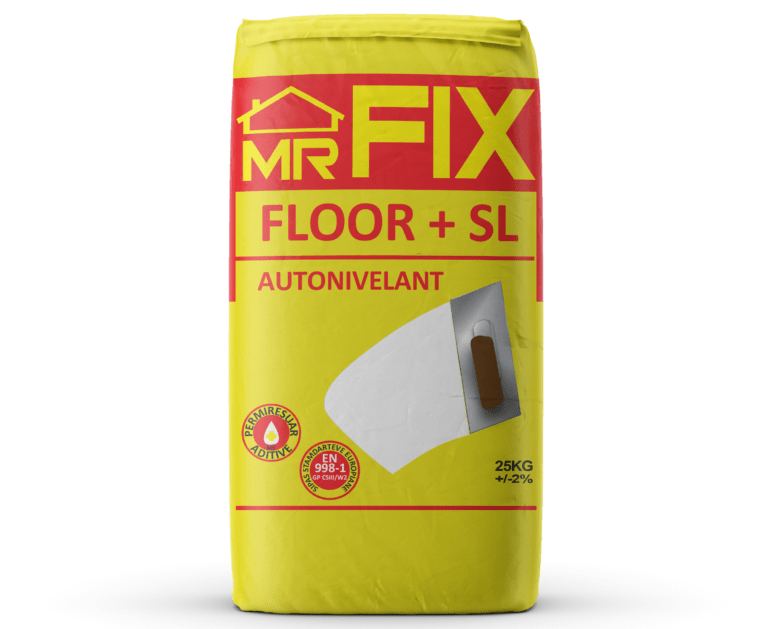
One solution available through Eder Trade is MrFix FLOOR + SL, a cement-based self-levelling compound designed for interior floors.
FLOOR + SL is classified as CT-C25-F6-B2 according to EN 13813 and is formulated using grey cement, controlled-granulometry sand, synthetic resins and additives that improve flow, workability and strength.
It is designed for levelling concrete floors before the application of different finishing materials and can also be used as a final layer in selected commercial areas such as warehouses and shops.
When Should FLOOR + SL Be Used?
FLOOR + SL is intended for relatively thin floor corrections rather than major reconstruction of the substrate.
Eder Trade specifies an application thickness of approximately 1–3 mm, making the product suitable when the existing floor is generally sound but requires a smoother and more uniform surface.
This can be particularly useful during renovation projects where an old concrete floor contains small surface irregularities but does not require an entirely new screed.
The product can prepare interior floors before finishes such as parquet, carpet and PVC, making it relevant for residential spaces, offices, commercial interiors and renovation work.
The important point is to distinguish between surface levelling and major floor correction. Large differences in height, significant cracks or unstable screeds may require a different repair system before a self-levelling layer can be considered.
Surface Preparation Comes Before Levelling
Self-levelling materials rely heavily on good adhesion to the substrate.
Before application, the floor should be thoroughly cleaned and all loose particles removed. Existing contamination can prevent the levelling compound from bonding correctly, while highly absorbent concrete may draw moisture from the fresh material too quickly.
For this reason, primers are often an important part of the preparation system.
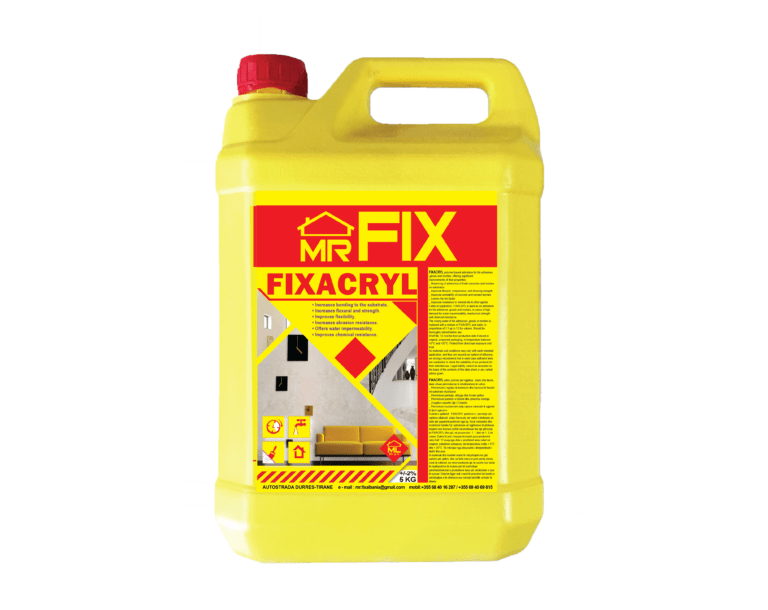
FIXACRYL, available in the MrFix primer range, is specifically described for use before self-levelling compounds. Its role includes helping reduce the formation of air bubbles and limiting overly rapid drying of the levelling material.
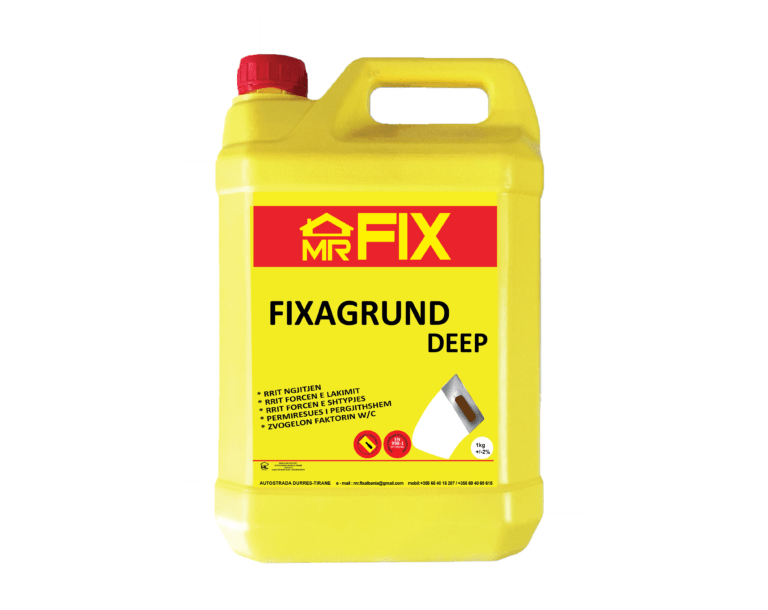
Eder Trade also offers primers such as FIXAGRUND DEEP for preparation of absorbent substrates, depending on the surface and the material that will follow.
The exact primer should always be selected according to the substrate and the technical requirements of the chosen levelling system.
Correct Mixing Is Essential
The performance of a self-levelling product depends on following the manufacturer’s specified mixing ratio.
Adding extra water may make the material appear easier to spread, but excessive water can change the characteristics for which the compound was designed. The same applies to mixing too little water or attempting to modify the product with unrelated materials.
The objective is to achieve the designed consistency so the compound can flow correctly while maintaining its mechanical properties.
Once mixed, the material should be distributed efficiently across the prepared floor within its recommended working time.
Self-levelling does not mean the product requires no application control. The contractor still needs to manage thickness, transitions and the overall working sequence.
Avoid Trying to Fix Every Floor Problem With One Layer
One of the most common mistakes in renovation is expecting a levelling compound to repair any type of floor damage.
A thin self-levelling layer is designed primarily to correct surface irregularities. Deep holes, large height differences, unstable concrete and active cracks should be repaired using appropriate materials before the final levelling stage.
Applying FLOOR + SL directly over a weak floor would simply create a new layer over an unsuitable foundation.
The correct process is to first establish that the substrate is structurally stable, carry out necessary repairs, prepare and prime the floor, and only then apply the self-levelling material.
Create the Right Base Before Choosing the Final Floor
Floor preparation is often hidden once a renovation is complete, but it has a direct influence on the quality of everything installed above it.
A product such as MrFix FLOOR + SL provides a specialised solution for creating a smooth interior surface over suitable concrete substrates, while preparation products such as FIXACRYL help create the conditions required for proper application.
For renovation projects, offices, homes or commercial interiors, correcting the substrate before installing parquet, carpet, PVC or another finish is generally more reliable than trying to compensate for floor irregularities afterwards.
The final flooring may be the part everyone sees, but a stable, properly prepared and level substrate is what gives the complete floor system the foundation it needs.