
C1 vs C2 Tile Adhesive: How to Choose the Right Adhesive for Your Project
Choosing the right tile adhesive is essential for a durable tile installation. The adhesive must create a reliable bond between the tile and the substrate while also responding correctly to factors such as tile size, moisture, temperature changes and movement.
One of the most common questions when choosing an adhesive is the difference between C1 and C2 tile adhesive. These classifications are not simply product names. They indicate different performance levels and help professionals select an adhesive that is appropriate for the conditions of a particular project.
Eder Trade offers several tile adhesive solutions through the MrFix and Chromos Svjetlost ranges, from standard adhesives for conventional ceramic tiles to higher-performance products for porcelain, natural stone and large-format installations.
What Does C1 Tile Adhesive Mean?
The letter C identifies a cementitious tile adhesive, while the number indicates its performance classification.
A C1 tile adhesive provides standard adhesion performance and is generally suitable for straightforward ceramic tile applications on stable mineral substrates.
A good example from the Eder Trade range is MrFix EXTRA 280, which is classified as C1 according to EN 12004. The product is designed for laying ceramic tiles and mosaics on floors, walls and ceilings and can be used on cement-based substrates. It is available in both grey and white versions.
For a standard interior wall or floor where the substrate is stable and the tile is relatively conventional, a C1 adhesive may therefore provide the required level of performance.
However, choosing an adhesive should never be based only on the assumption that a standard product will work everywhere.

What Is C2 Tile Adhesive?
A C2 tile adhesive offers improved adhesion compared with the basic C1 classification.
This becomes particularly important when installing tiles in more demanding situations, such as exterior surfaces, large-format tiles, low-absorption porcelain tiles, existing tiled surfaces or areas affected by temperature changes and greater mechanical stress.
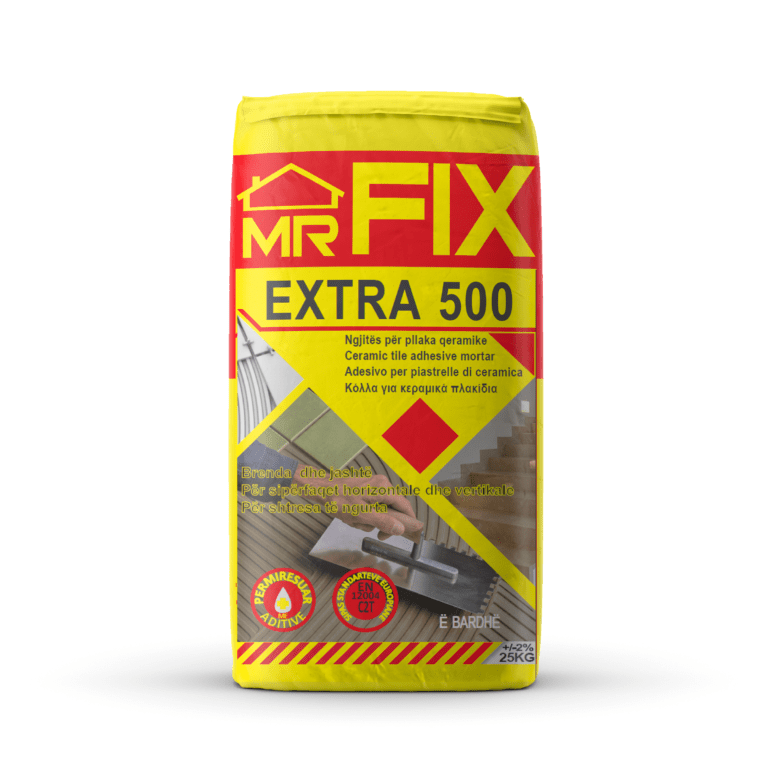
For example, MrFix EXTRA 500 is classified as C2TES2 according to EN 12004. In addition to improved adhesion, its classification indicates slip resistance, extended open time and high deformability. The product is designed for applications including large-format porcelain tiles, natural stone, floors and walls, indoor and outdoor areas, existing tile surfaces and floors exposed to heavy traffic.
This illustrates why simply asking for “tile glue” is often not enough. The requirements of a small ceramic wall tile and a large porcelain floor tile can be very different.
C1 vs C2: Which Adhesive Should You Choose?
The correct choice begins with the project rather than the product.
For uncomplicated ceramic tile installations on stable cement-based surfaces, a product in the C1 category such as EXTRA 280 may be appropriate. When the project becomes more demanding, moving to an improved C2 adhesive can provide the additional performance required.
Tile format is particularly important. Large tiles place different demands on the adhesive layer because of their weight and surface area. Low-absorption materials such as porcelain can also require stronger bonding properties than traditional absorbent ceramic tiles.
The location matters as well. An interior kitchen wall does not face the same conditions as an exterior terrace, commercial floor or constantly humid environment.
For projects requiring an improved yet deformable adhesive, Eder Trade also offers EXTRA 450, classified as C2TES1. It is suitable for ceramic and stone materials, including large porcelain tiles, and is designed for indoor and outdoor applications.
The difference between S1 and S2 classifications is also relevant on more demanding projects. S1 indicates a deformable adhesive, while S2 represents a higher level of deformability. This can become important when the tiled system is exposed to movement or dimensional changes.
Surface Preparation Can Determine the Final Result
Even the best tile adhesive cannot compensate for a poorly prepared substrate.
Before installation, the surface should be firm, clean and free from dust, grease and unstable material. Irregularities should be corrected before tile installation begins.
Certain surfaces may also require priming. For example, Eder Trade specifies that EXTRA 500 can be used for ceramic installation on gypsum surfaces after the substrate has first been treated with FIXACRYL primer.
Correct preparation helps the adhesive establish the bond it was designed to provide.
The adhesive should also be mixed according to the manufacturer’s recommended water ratio and application instructions. Adding excessive water or using material after its recommended working time can negatively affect performance.

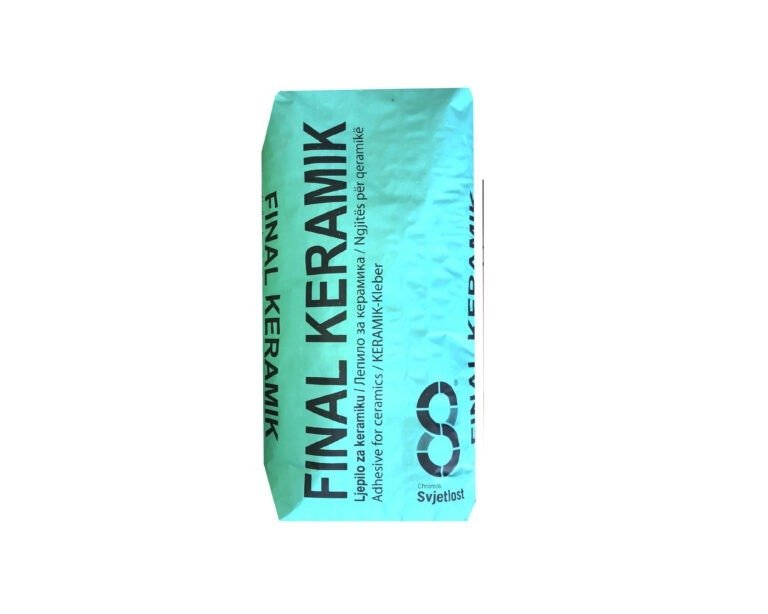
Chromos Svjetlost Tile Adhesive Options
Eder Trade’s tile installation range is not limited to MrFix.
Through Chromos Svjetlost, the company also offers FINAL KERAMIK, a cement-based multifunctional building adhesive intended for ceramic tiles, clinker brick, glass and mosaics on suitable wall and floor surfaces. The substrate must be flat, firm and free from dust or greasy contamination before application.
A flexible version, FINAL KERAMIK FLEX, is also available within the Chromos Svjetlost tile range.
Having several adhesive options is useful because professional tile installation is about matching the material to the application rather than using the same adhesive on every project.
Choose Tile Adhesive According to the Entire Project
When selecting a tile adhesive, consider the tile material, dimensions, substrate, installation location and environmental conditions together.
For a standard ceramic installation, a C1 adhesive can often provide the necessary performance. For porcelain, large-format tiles, exterior areas or surfaces exposed to more demanding conditions, an improved C2 adhesive may be the more appropriate solution.

Eder Trade’s tile adhesive portfolio includes products ranging from EXTRA 280 and EXTRA 300 to higher-performance options such as EXTRA 450 and EXTRA 500, as well as Chromos Svjetlost solutions including FINAL KERAMIK and FINAL KERAMIK FLEX. The MrFix tile adhesive category currently includes multiple adhesive options designed for different levels of installation performance.
The objective should not be to choose the strongest or most expensive adhesive automatically. It should be to choose the correct tile adhesive for the specific substrate, tile and application.
For projects where the required classification is not clear, Eder Trade can provide technical guidance to help match the tile installation conditions with the appropriate adhesive system.